






































































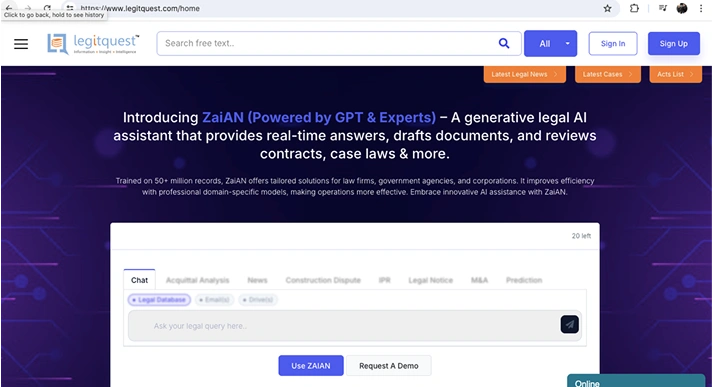
Why LIBIL

Unrivalled coverage
400M+ court and tribunal records across Supreme Court, all High Courts, district courts and major tribunals, plus institutional lists. FIR coverage of over 4M+ records.

Designed for commercial decisions:
Built for legal, investment, credit and financial crime investigations teams who need litigation check outputs that map to valuation, disclosure and credit decisions.

Flexible delivery
Instant API for high throughput screening, Detailed API for scored narrative reports, and bespoke manual IPO Reports for prospectus-grade disclosure.
Core Capabilities
-
 Comprehensive litigation search by name, father name, address, aliases and entity identifiers across India’s courts and tribunals.
-
FIR and enforcement checks integrated with court data to flag criminal or enforcement exposure, enabling forensic investigations and criminal background screening.
-
Defaulter and regulator watch from credit bureaus and institutional lists to provide consolidated enterprise risk mitigation signals.
-
Automated scoring and case match metrics to prioritise risk in underwriting and due diligence workflows.
-
Narrative reasoning in Detailed and IPO reports that explains why a record matters to a transaction or credit decision.
-
APIs and client portal with audit logs, exports, team access controls and historical search storage for compliance and scale.

LIBIL - Litigation Check Reports
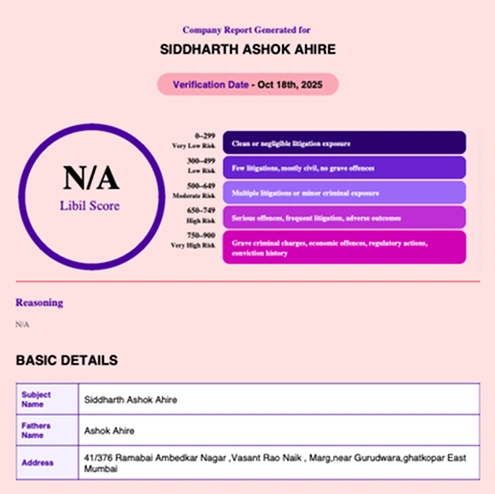
Instant Report: Speed First
-
Turnaround time 1 to 2 minutes. Basic case summaries for large scale onboarding and high throughput background check service. Use for initial prescreening and fast BGV workflows.
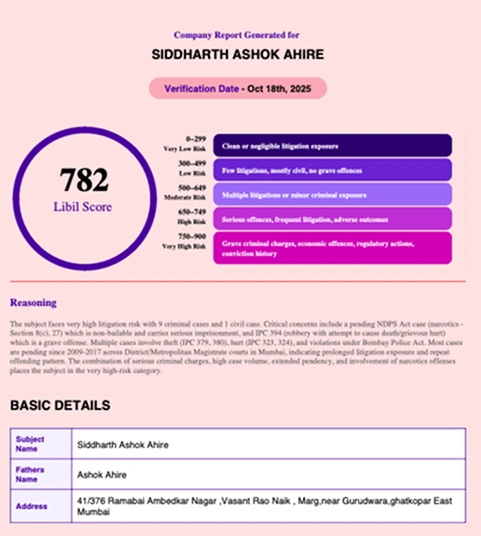
Detailed Report: scored and narrative
-
Turnaround time approximately 2 hours. Includes LIBIL Score, case match scoring, detailed summaries and narrative reasoning to support credit memos, legal memos and investigations. Ideal for deeper background verification and forensic investigations.
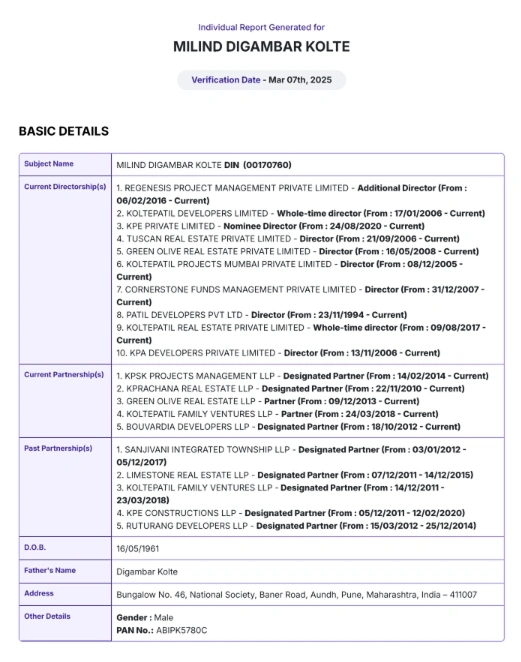
IPO Report: manual, disclosure grade
-
Analyst-prepared report with full manual review and narrative for prospectus schedules, regulator responses and underwriting sign-offs. Tailored to transaction scope.
How LIBIL Enhances Case Evaluation and Decision-Making
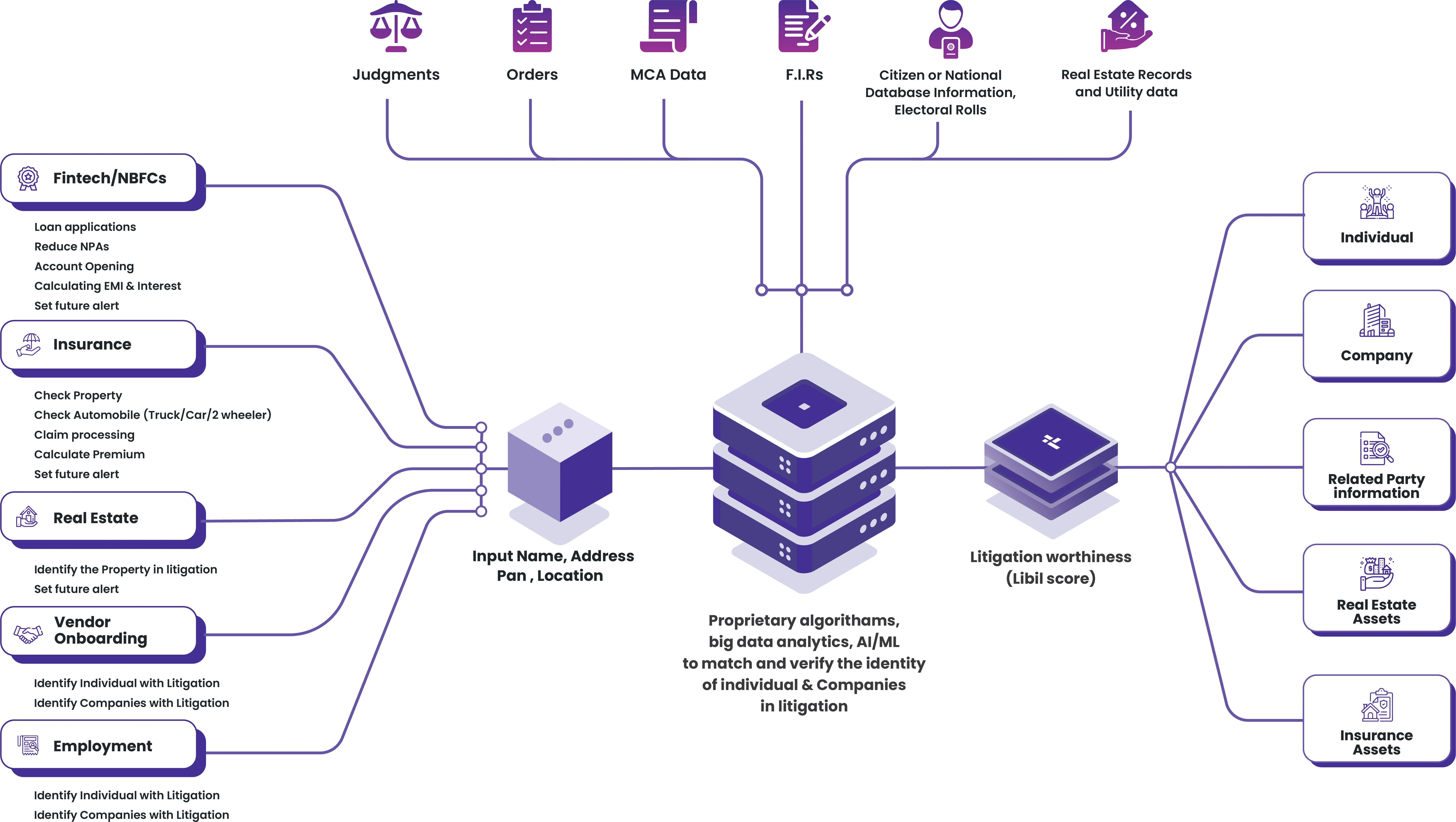
Boost accuracy with real-time scoring, actionable metrics, and predictive analytics for more informed legal strategies.
Use Case Playbooks
M&A Due Diligence
Goal: surface litigation and enforcement liabilities that affect valuation, indemnities or deal structure.
How: run Detailed Reports on target, promoters and related parties; use LIBIL Score and case match score to prioritise issues and export case summaries for disclosure schedules.
IPO Due Diligence
Goal: prepare disclosure-ready litigation schedules and identify remedial or disclosure needs.
How: commission the manual IPO Report for deep review and supplement with Detailed API for bulk filing teams.
Lending and Credit Underwriting
Goal: detect litigation, enforcement and defaulter signals tied to borrowers, promoters or guarantors.
How: use Instant Reports for lead-level pre-screening and Detailed Reports for large ticket or borderline credits. LIBIL outputs feed risk management tools and credit decision engines.
Financial Crime Investigation
Goal: trace litigation exposure, FIRs and enforcement actions linked to people, entities and assets.
How: run Detailed Reports, use father name and address matching to build entity networks and export case summaries for investigative files. LIBIL supports forensic investigations with FIR and tribunal linkages.
Background Checks and Onboarding
Goal: scale hire, vendor and onboarding screening across risk tiers for regulatory KYC and litigation checks.
How: run Instant Reports at scale. Escalate hits to Detailed Reports for legal review. LIBIL becomes a core component of background verification and BGV workflows.
Trusted by the top names in the industry
Press & Recognitions
-
 Forbes india
Legitquest: On a quest to building a legal technology framework in India
-
 financialexpress
LegitQuest: Now, millions of law case records at your fingertips
-
 yourstory
Google picks 16 Indian startups for its 5th accelerator programme
-
 entrackr
Funding in Indian startups this week (05 Apr-10 Apr)
-
.webp) Economic Times
Economic TimesLegitquest raises $660,000 in ongoing round from existing investors InfoEdge, WaterBridge Ventures
-
 Inc42
Inc42Info Edge To Invest INR 4 Cr In Legal Tech Startup LegitQuest
-
 Business Standard
Startup Investments (Holding) to invest Rs 4 cr in Legitquest
-
 Capital Market
Startup Investments (Holding) to invest Rs 4 cr in Legitquest
-
 Vise Stories
Legitquest Raises $660K in Ongoing Round from Existing Investors
Ready to reduce blind spots in deals, hirings and credit?
LIBIL delivers litigation checks that stand up to scrutiny, scale with volume and protect reputation.
FAQs
Our Legal AI Research FAQ addresses key questions about our work in advancing AI for legal applications, ensuring accuracy, efficiency, and ethical compliance.


